 TR
 EN
 FR
 RU
 AR
 DE
 ES
 IT
 CONTACT
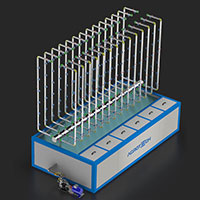
High-pressure spray system for uniform cleaning of complex geometry parts. Ideal for automotive components, engine blocks and machinery manufacturing.
View DetailsSurface Treatment Lines
Surface treatment lines are industrial pretreatment systems used for metal surface preparation before painting. These lines perform degreasing, rust removal, phosphating and passivation processes automatically or semi-automatically. Acrotech manufactures two types of surface treatment lines for the automotive, white goods, furniture and metal processing industries: Spray Type and Dip Type.
Which System Should You Choose?
Choose Spray Type:
- Complex geometry parts
- Products with internal surfaces
- Automotive, machine parts
- High-volume production
Choose Dip Type:
- Flat surface parts
- Panels, sheets, profiles
- White goods, furniture
- Serial production lines
Explore System Types
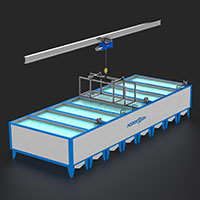
Full immersion tank system for uniform cleaning and surface preparation. High efficiency for flat surface parts, panels and serial production lines.
View DetailsWhat Is a Pretreatment Line and Why Does It Matter?
A pretreatment line, also called a surface treatment line, cleans metal parts and prepares their surface before powder coating or wet painting. Oil, dirt and oxides on the part stop the coating from bonding well. A conversion layer such as phosphate improves adhesion and corrosion resistance. Even the best booth and oven cannot fix a poorly prepared surface, so pretreatment is where coating quality starts. Acrotech designs and manufactures spray and dip surface treatment lines as stand-alone systems or as part of a complete painting plant.
Surface Treatment Process Stages
- Degreasing: Alkaline or neutral degreasing removes oil and dirt.
- Rinsing: Chemical residues are washed off between stages.
- Conversion coating: Iron phosphating, zinc phosphating or nano chemicals form a layer that improves adhesion and corrosion resistance.
- Passivation and final rinse: The surface is sealed and rinsed clean.
- Drying: Parts are dried in a drying oven before entering the booth.
Surface Treatment Line Types
1. Spray Pretreatment Line
In a spray line, parts are carried by the conveyor through tunnel stages where nozzles spray the chemicals at 1.5–2.0 bar. Bath temperature is held at 55–65°C, and pH is controlled automatically between 4 and 6. Spray pretreatment is the natural choice for continuous conveyor lines with steady production. Spray surface treatment details
2. Dip Pretreatment Line
In a dip line, parts are fully immersed in process tanks, typically for 5–15 minutes per stage. Because the liquid reaches inner surfaces and closed profiles, dip pretreatment is preferred for complex parts that spray nozzles cannot fully reach. Dip surface treatment details
Spray or Dip: Comparison
| Criterion | Spray Line | Dip Line |
|---|---|---|
| Method | Nozzles spray chemicals at 1.5–2.0 bar | Full immersion in tanks |
| Process time | Set by conveyor speed | Typically 5–15 minutes per stage |
| Process control | 55–65°C, pH 4–6 controlled automatically | Per stage, per chemical |
| Part geometry | Open, accessible surfaces | Inner surfaces, closed profiles, complex parts |
| Best for | Continuous conveyor lines | Complex parts that spray cannot fully reach |
How to Choose a Pretreatment System
- Material: Steel, galvanised steel and aluminium need different chemicals and stages.
- Corrosion requirement: Indoor parts and outdoor parts need different levels of protection, which decides between iron phosphate, zinc phosphate or nano.
- Capacity: Line speed and part size set the length of each spray stage or the size of each tank.
- Water and waste: Rinse water use and wastewater treatment must be planned for your site.
- Energy: Heated baths and the drying oven are part of the plant's energy budget.
The surface treatment line is the first process station of a powder coating plant or wet painting line. After drying, parts move on the conveyor to the powder coating booth and then to the curing oven. Acrotech sizes all of these with one capacity calculation.
Spray or Dip: Which Pretreatment Line Fits Your Parts?
If your parts are mostly open profiles, sheets or panels and you run a continuous conveyor line, a spray pretreatment line is usually the right choice. Process time is set by the conveyor speed and the length of each stage. If your parts have closed profiles, inner surfaces or complex shapes that spray nozzles cannot fully reach, a dip line gives complete coverage. We review your parts and production plan with you before choosing the line type.
Frequently Asked Questions
Is pretreatment necessary before powder coating?
Yes. Oil, dirt and oxides prevent the powder from bonding well. Correct pretreatment gives better adhesion and longer corrosion resistance, and it is the basis of a durable finish.
Should I use iron phosphate or zinc phosphate?
Iron phosphate is simpler and suits many indoor applications. Zinc phosphate gives higher corrosion resistance for demanding outdoor use. Nano chemicals are another option. The choice depends on your material and corrosion requirement.
How many stages does a surface treatment line need?
It depends on the material and the corrosion requirement. A line usually includes degreasing, rinsing, phosphating or nano treatment, passivation with final rinse, and drying. We define the stages with you at the project stage.
Get a quote for your pretreatment line. Tell us your material, part sizes, capacity and corrosion requirement, and our engineers will design the right surface treatment line for you.
Request a Quote +90 216 465 66 88